
Anyone who has seen the Costa delle Miniere, near Porto Flavia and Buggerru, has actually already caught a glimpse of something much bigger. That entire coastal area is part of a hiking trail stretching hundreds of kilometers: the Cammino Minerario di Santa Barbara. It’s a journey that takes you right past the very spots where miners earned their living for centuries, with the sea as a constant companion.
What is the Cammino Minerario di Santa Barbara?
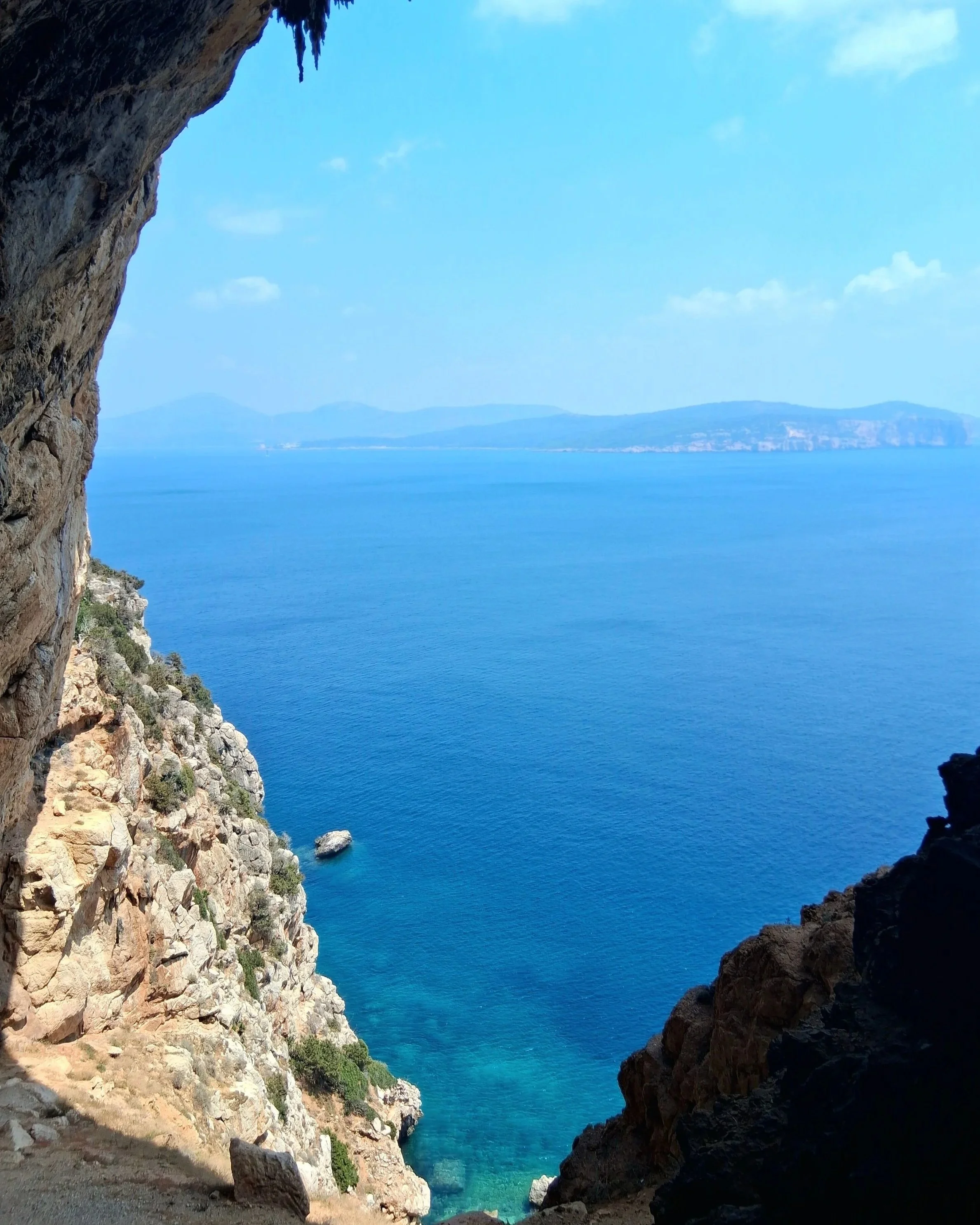
It is a loop-shaped hiking trail in southwestern Sardinia, with Iglesias as its fixed starting and ending point. It is named after Saint Barbara, the patron saint of miners, whom they would invoke before entering the darkness of the mines. The route is divided into stages and follows old mining trails, mule trails, and connecting paths between former mining sites.
Along the way, you'll pass through abandoned mining villages, along cliffs overlooking a turquoise sea, and through forests in the interior. The route constantly alternates between the coast and the mountains—no two kilometers of the same landscape, but a journey that constantly changes in character.
Practical Information: Distance, Stages, and Signage

The route is known as a journey of about 500 kilometers, divided into roughly 30 stages (depending on the source and variant you follow). The signage consists of yellow towers on a blue background, though it isn’t complete everywhere—so a good map or GPS track is definitely a must.
You don't have to walk the entire route in one go. Many hikers choose to do a few sections each year, or to limit themselves to the southwestern part around Iglesias, Buggerru, and Masua—the very area where Porto Flavia is located.
When are you leaving?
Spring and fall are the best seasons. Summer is too hot and too dry in this part of the island for long days of hiking without shade, especially on the sections that run close to the coast.
Staying Overnight While Traveling
A special feature of the journey are the posadas: simple places to stay along the route, originally set up for pilgrims and hikers. They offer a bed, a kitchen, and a shower—no luxuries, but just enough to start the next leg of the journey feeling refreshed. In some villages, you can also find regular hotels and guesthouses.
Can also be done by bike

For those who prefer biking to hiking: there is an official biking version of the Cammino, covering about 550 kilometers spread over 9 stages. The route isn’t extremely technical, but it includes enough unpaved terrain to make a gravel or mountain bike a better choice than a regular bike. The average gradient is around 6%, with peaks of up to 15%—expect to spend about 7 to 10 days on the entire route.
For bike rentals, La Pedivella in Cagliari is a convenient starting point, especially since you’ll be arriving there by plane or boat anyway. They rent out gravel and trekking bikes, including racks and panniers, offer technical assistance for those bringing their own bikes, and even deliver and pick up the bikes at the start and end points of the Cammino.
Insider tip: Combine a day hike on the Cammino with a visit to Porto Flavia itself. The section between Nebida and Masua is close to the mine entrance and, in just a few hours, gives you a good sense of what the entire route is all about—without having to embark on a multi-day hike right away.
Would you like to know which part of this impressive route best fits your trip to Sardinia—or how to best combine it with other places in the south? At Sardegna Autentica, I’d be happy to help you plan and put together a customized itinerary.